
Smartwatch Sleep Tracking
Your watch gives you a sleep score. How should you use it? 😴⌚
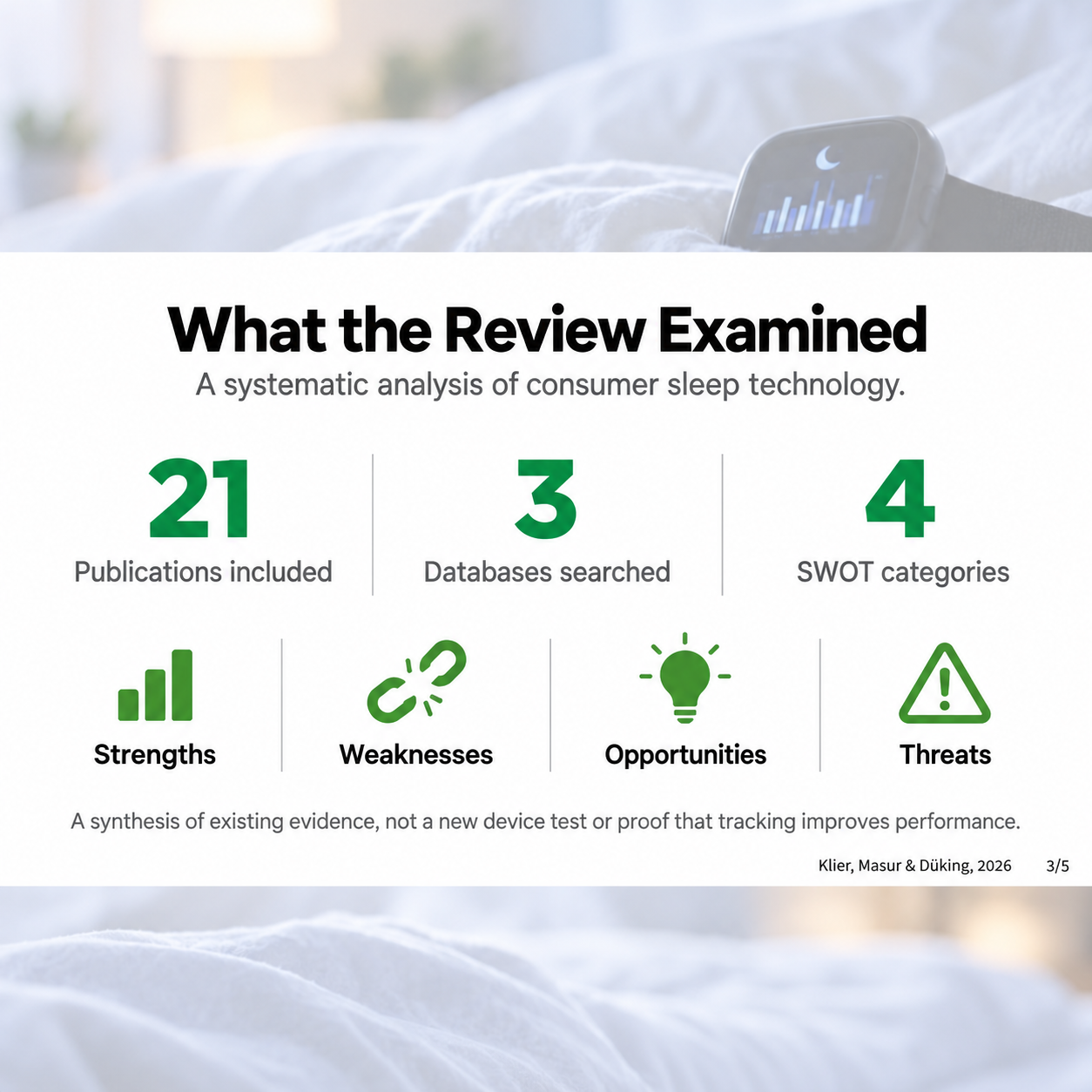
Our systematic review analysed 21 publications on consumer sleep technology, examining its strengths, weaknesses, opportunities and threats.
The practical message: tracking can help you understand your sleep habits, but interpretation matters.
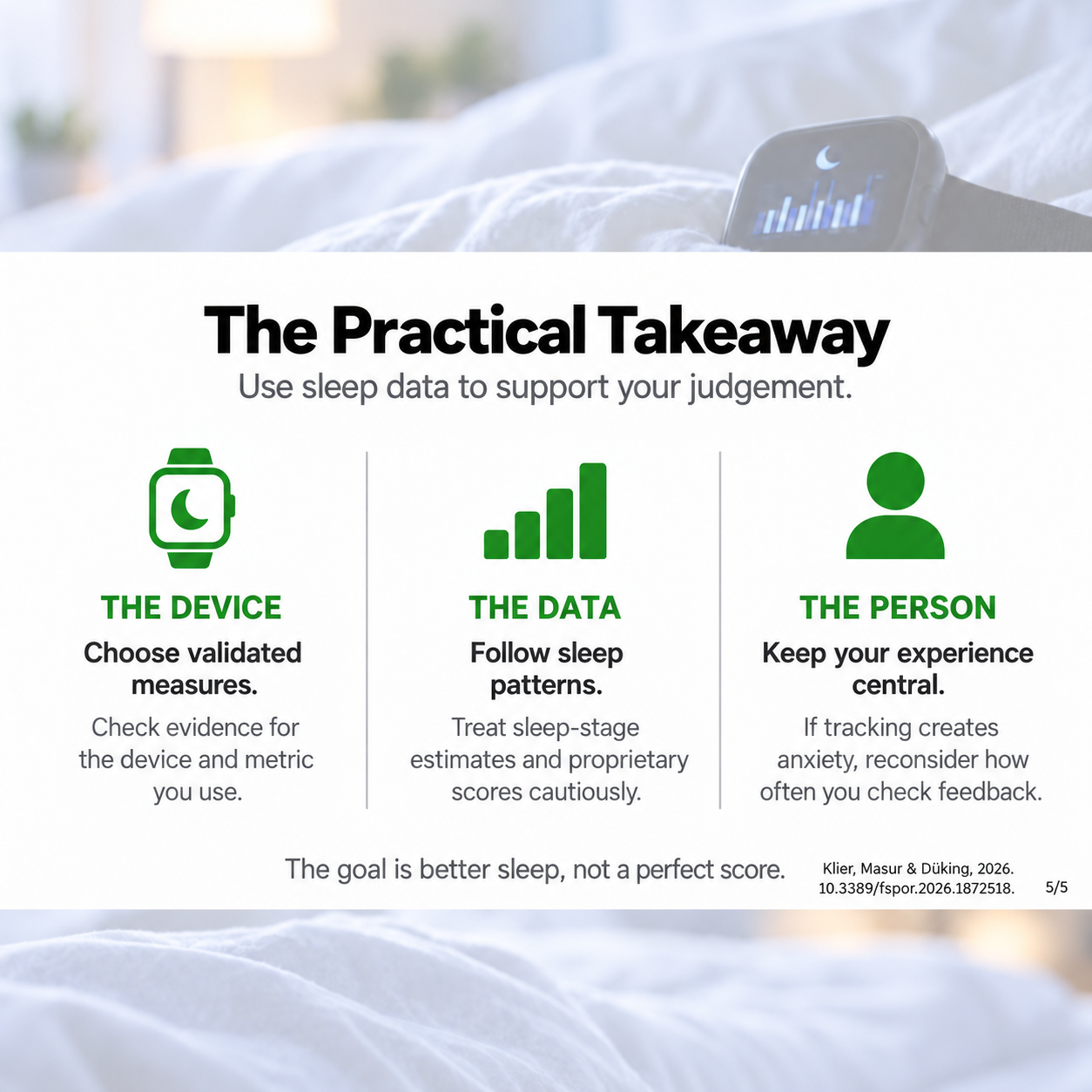
✅ Focus on sleep duration and timing, using a device with validation evidence for those measures.
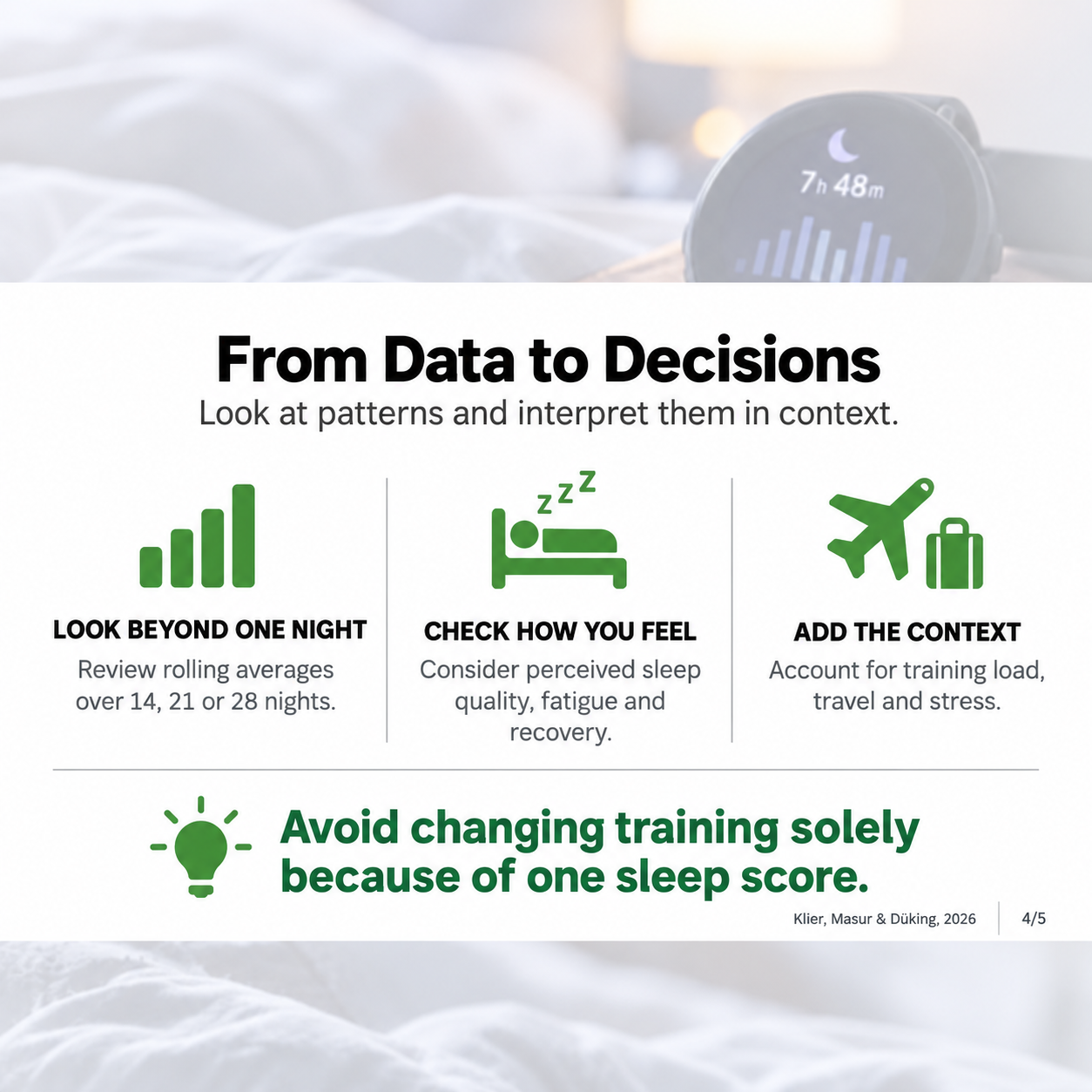
✅ Look at patterns across multiple nights. The review recommends rolling averages over 14, 21 or 28 nights.
✅ Combine the data with how rested you feel, your training load, travel and stress.
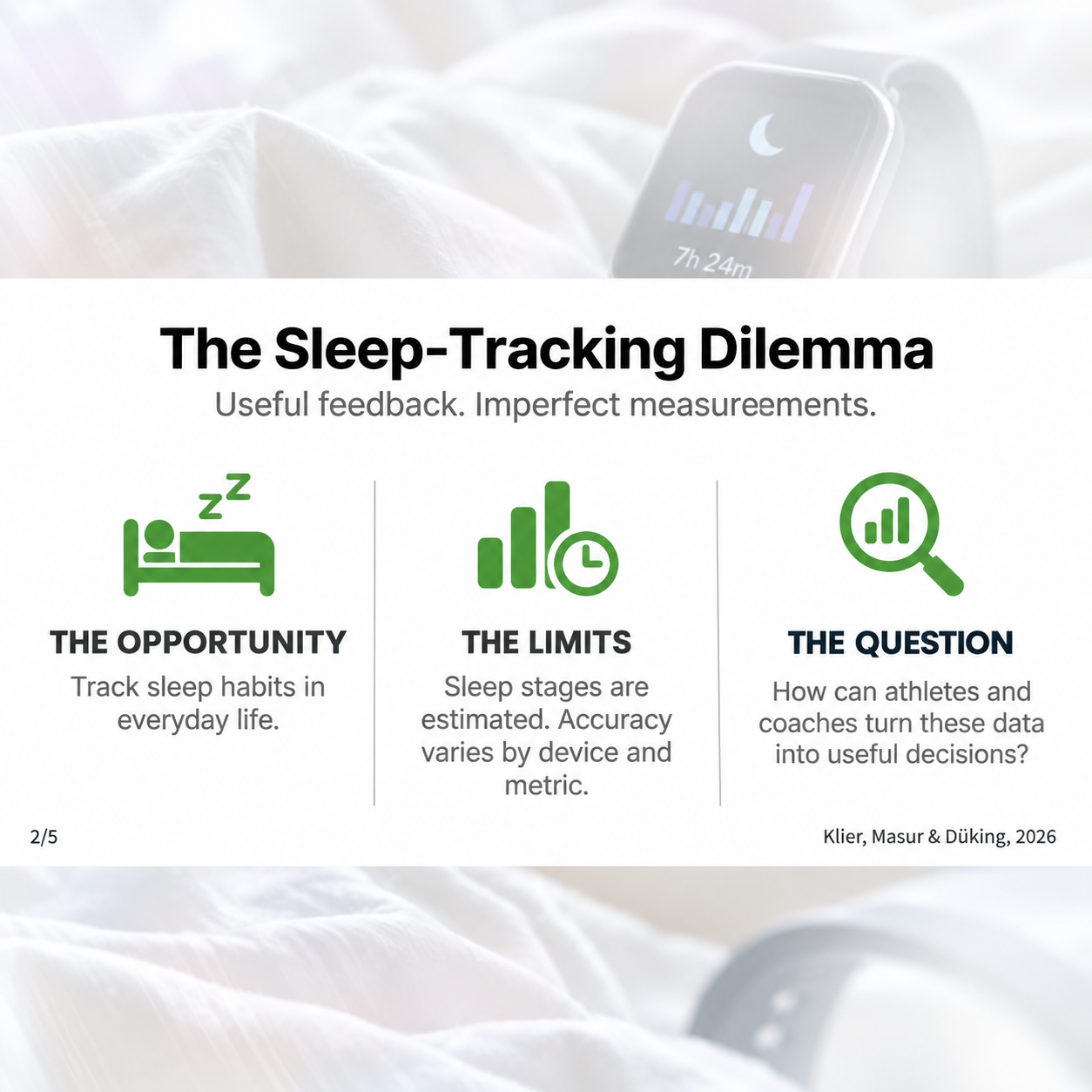
⚠️ Treat sleep-stage estimates and proprietary scores cautiously. Accuracy varies between devices and metrics.
⚠️ Avoid changing training solely because of one sleep score.
⚠️ If checking your data creates anxiety, reconsider how you use the feedback.
This review provides practical recommendations. It does not establish that tracking alone improves athletic performance.
The goal: better sleep and informed decisions.
Save this post for your next sleep-data check. Does your tracker help you understand your sleep, or make you worry about it?
📖 Klier K, Masur L & Düking P (2026). Consumer-oriented (wearable) sleep technology: a systematic SWOT analysis and recommendations for athletes and fitness enthusiasts. Frontiers in Sports and Active Living, 8:1872518.
https://doi.org/10.3389/fspor.2026.1872518
#ScienceAboutSportsTech #SleepTracking #WearableTechnology #SportsScience #AthleteRecovery