
Validity Wearables
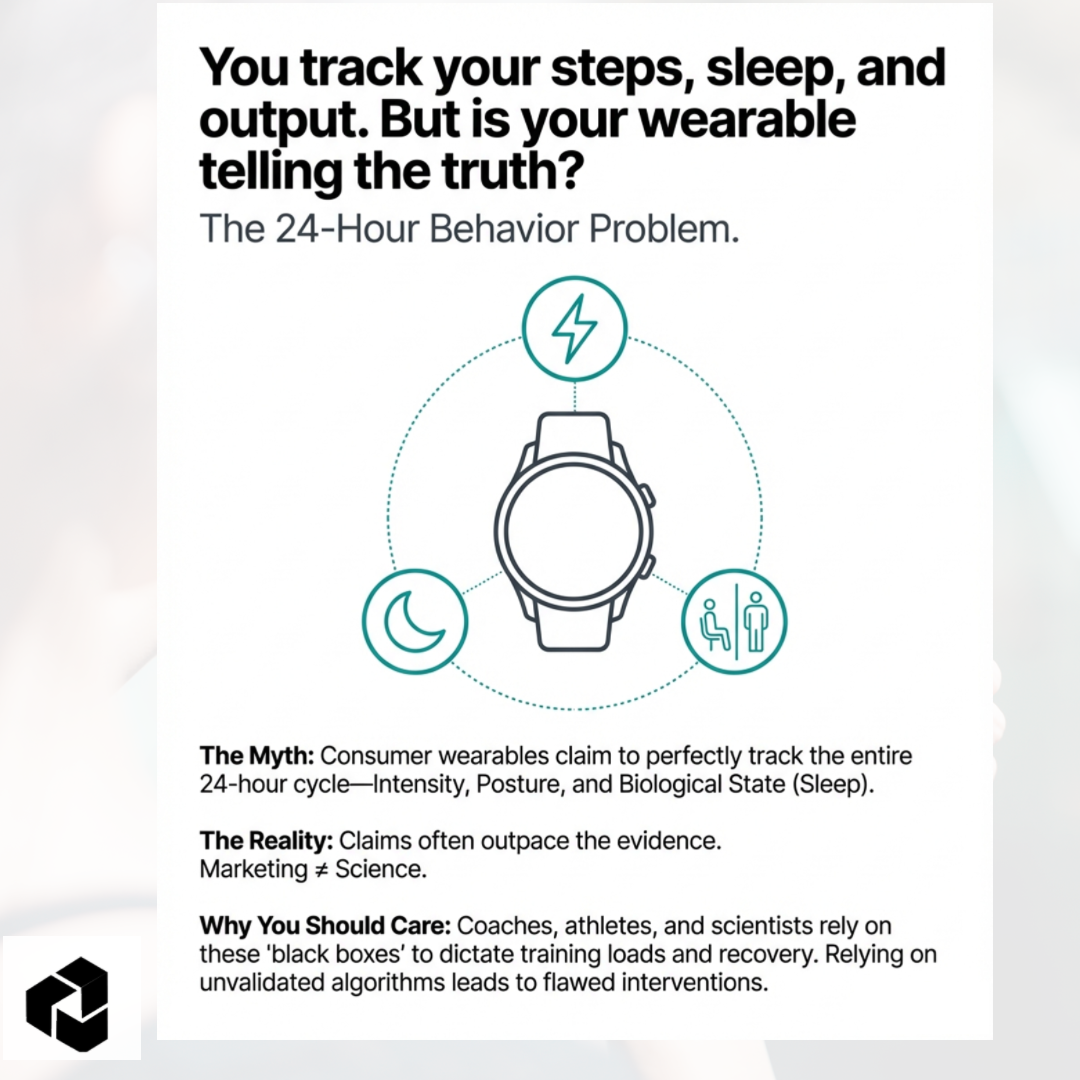
🔬 Are wearable devices actually valid for monitoring 24-h behaviour?
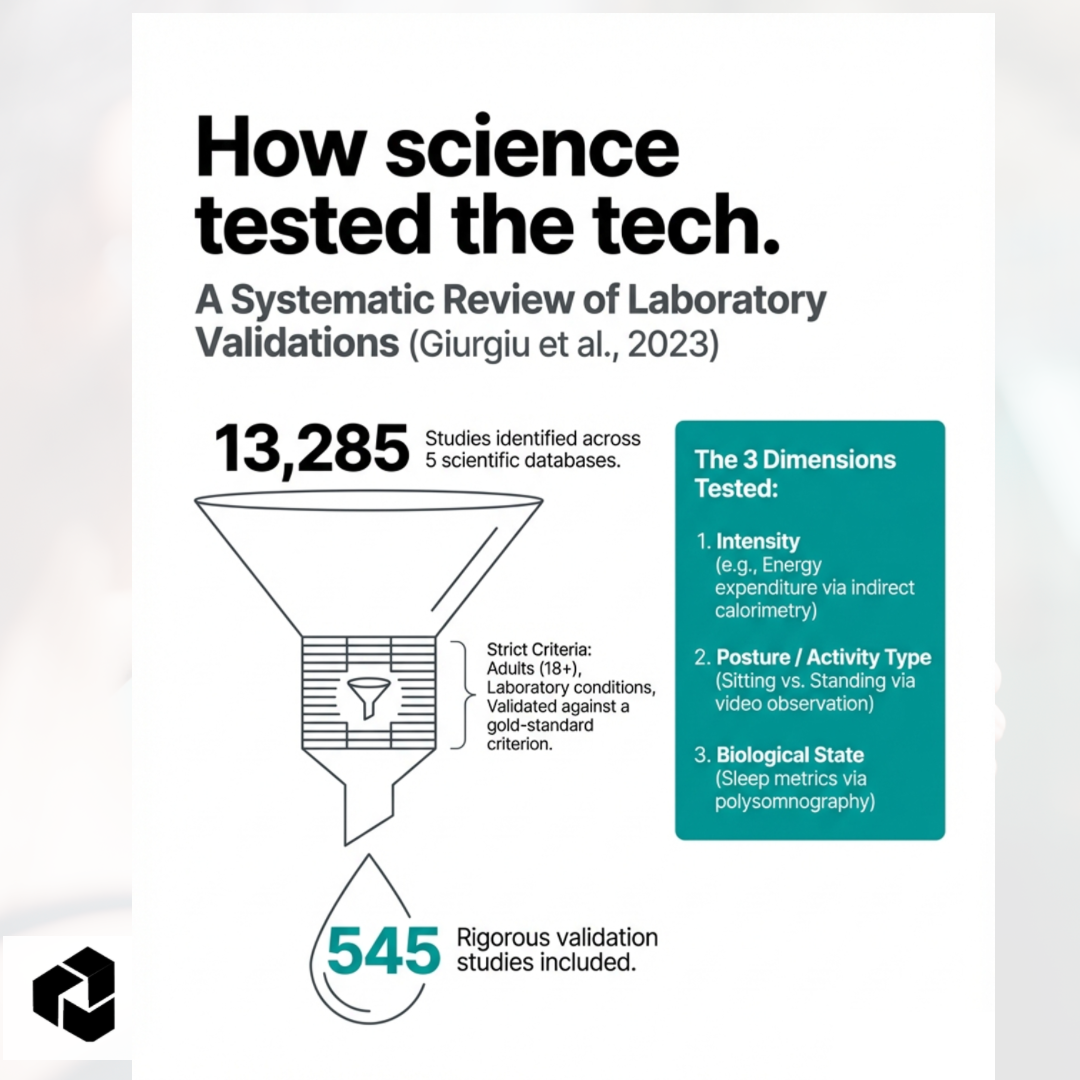
A recent systematic review sheds light on a critical issue for science, coaching, and applied sport practice:
👉
📊 Key findings (n = 545 validation studies):
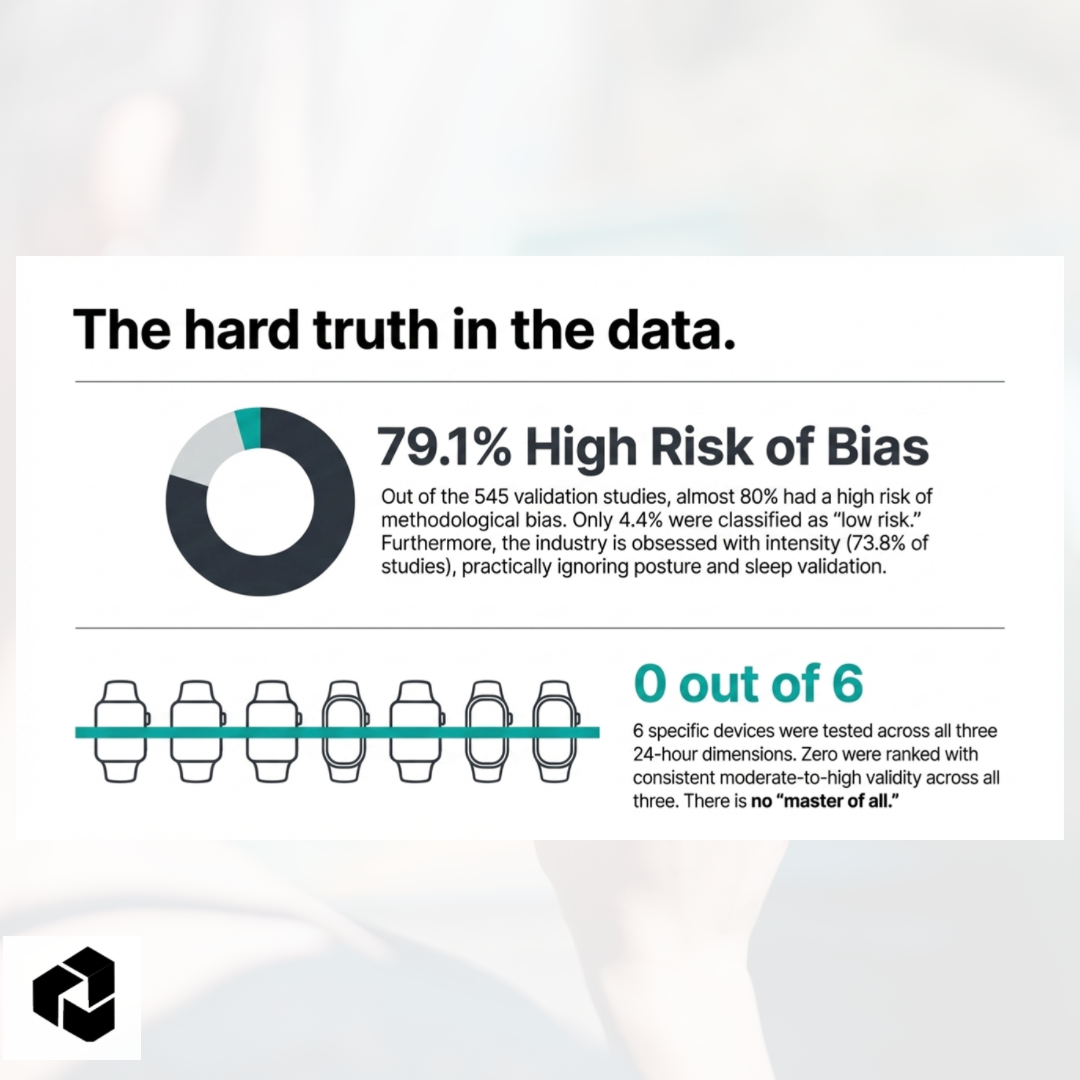
⚠️ Methodological quality is low
• Only 4.4% of studies = low risk of bias
• ~79% classified as high risk
📉 Validity is inconsistent
• 24%: moderate–strong validity
• 56%: mixed results
• 20%: poor validity
🧩 Fragmented evidence base
• >50% of devices validated only once
• Most wearables validated for one dimension only
(e.g., activity or sleep, not both)
🚫 No “all-in-one” solution
• Even widely used devices (e.g., ActiGraph, Fitbit, Apple Watch)
→ no consistent validity across intensity, posture, and biological state
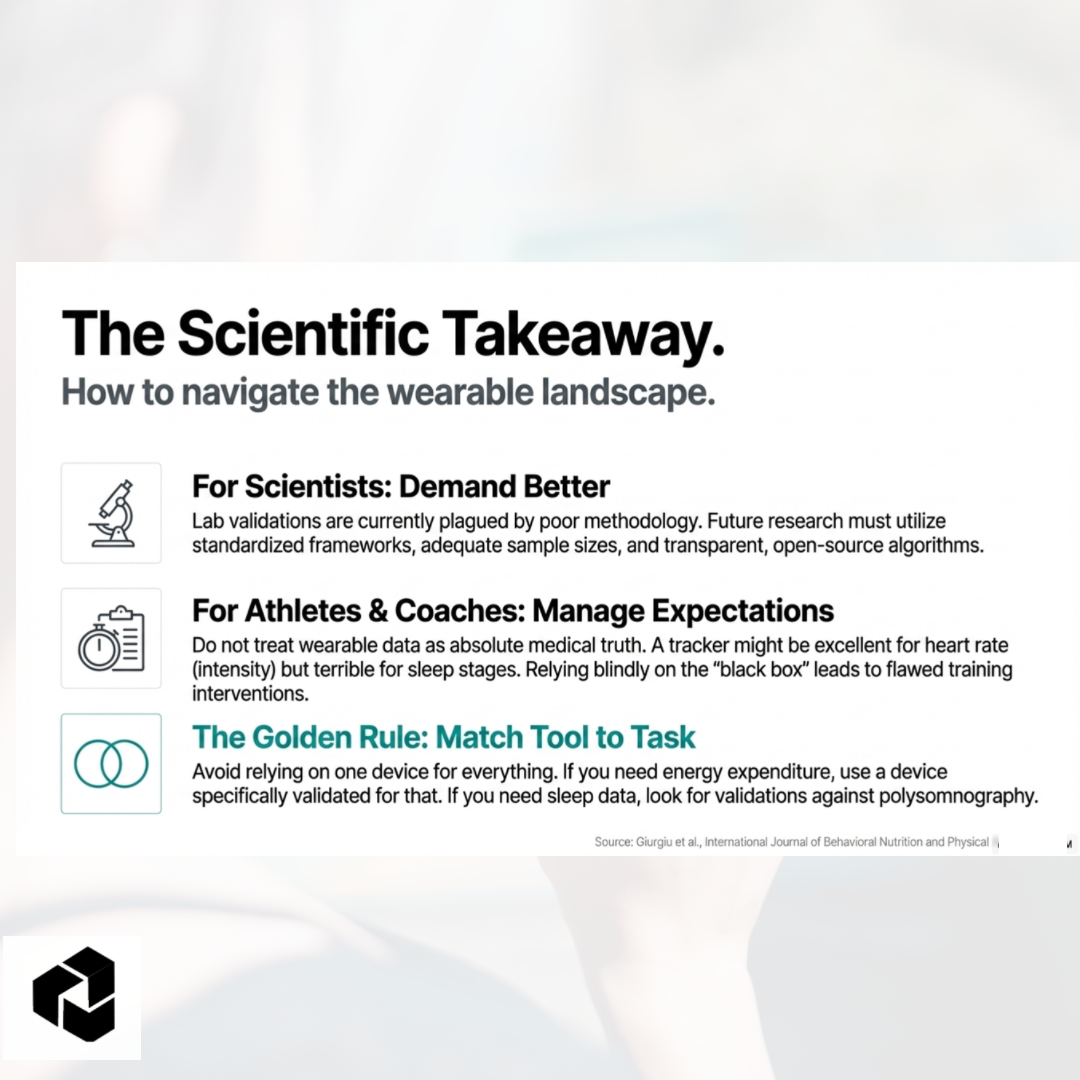
🎯 Implications for different stakeholders
👩🔬 Researchers
• High heterogeneity in protocols limits comparability
• Urgent need for standardized validation frameworks
• Transparent algorithms and independent validation are essential
🏃 Coaches & practitioners
• Be cautious when interpreting wearable-derived metrics
• Device choice must be outcome-specific (e.g., sleep ≠ energy expenditure)
• “More data” ≠ “better decisions”
🚴 Athletes
• Wearables can guide behaviour
• But absolute values are often uncertain
• Focus on trends within the same device, not cross-device comparisons
🧠 Bottom line
Wearables are powerful tools for continuous monitoring, but:
👉 Evidence quality does not match market claims
👉 Standardization and validation remain the bottleneck
Full Article: https://pubmed.ncbi.nlm.nih.gov/37291598/
#Wearables #SportsScience #DataQuality #EvidenceBased #TrainingScience #DigitalHealth